Uncategorized
My Character’s Personalized Plates
I saw this license plate the other day, and I was disgusted. Disgusted that anyone would not only THINK it, but that they would pronounce it to the world by putting it on their license plate. (And oh yeah, I’m leaving you in suspense.)
But it did get me to thinking . . . what would my characters put on their license plates (if, you know, they had cars)?
My bad guy: BRNSRPWR [Brains are power]
Prince Bob: CHRMSBRO [Charming’s Brother]
or maybe LILBRO [Little Brother]
Prince Charming: PERFECT (Okay, so maybe this is what Bob would put on Charming’s personalized plates.)
Yeah, my efforts are a little weak, but working with only 8 letters is hard! I may have to come back to this.
But how about you? What would your characters put on their personalized plates?
Speak up:
18 comments| TAGS:
personalized license plates, Prince Bob, Prince CharmingHappy Pre-Martin Luther King Jr. Day!
One of the perks of having your children in school is that you get to re-learn a bunch of stuff you forgot, except now you actually APPRECIATE learning it.
And I’ve been appreciating the peaceful methods of Martin Luther King Jr. to make changes in a government that didn’t want to change. Hate and violence surrounded him, but he didn’t take the bait and retaliate. He didn’t give up because it was hard. He moved forward with a dream, and I think we could all use a little more of that in our lives.
So I want to wish you all a Happy Martin Luther King Jr. Day today, since I will be enjoying my children on his holiday.
And just a quick reminder to weigh in on my latest This vs. That post if you haven’t had a chance!
Speak up:
16 comments| TAGS:
holiday, Martin Luther King Jr., schoolConquering Clichés, Part 2: Ways to be Cliché
I only intended one post on clichés, but in writing it, there was so much information I had to break it up:
Conquering Clichés, Part 1: Introduction
Conquering Clichés, Part 2: Ways to be Cliché
Conquering Clichés, Part 3: Why We are Cautioned Against Them
Conquering Clichés, Part 4: Using Them . . . or Not
The whole idea of clichés fascinates me! Basically, someone expressed an idea in such a unique, amazing, succinct way that everyone jumped on the bandwagon to use it. And *POOF*, suddenly it’s not so unique. Just another overused expression that may or may not mean what you think it means.
I found a cliché dictionary1 at the library that claims over 3,500 clichés! While I’d never heard some of them before, there were more that I knew. Perhaps I was influenced by my mom who had a saying for every situation, but I think part of why clichés sneak so easily into our writing is because we all naturally use them in speech without even realizing we’re doing it.
Learning to recognize clichés is the first step to conquering them—meaning, using them to your advantage rather than vice versa. In this post, I simply want to lay out a few examples of clichés.
Betty Kirkpatrick, in her book on clichés2 attempts to categorize them, which I find extremely useful. Here are some of her categories with my attempt to explain them:
Simile Clichés: All those overused comparisons (often using ‘like’ or ‘as’)
- Cold as ice
- Like two peas in a pod
Proverb Clichés: Commonly known/used sayings or expressions, often giving advice
- The early bird catches the worm
- What goes around, comes around
Idiom Clichés: (Akin to proverb clichés.) Overused expressions where the meaning does not equal the sum of the parts (i.e. the meaning is figurative instead of literal).
- When pigs fly
- Climbing on the bandwagon
Allusion Clichés: An overused phrase that alludes/refers to an idea or story
- He’s a good Samaritan
- The Green-eyed monster
Doublet Clichés: Two words joined by ‘and’ WAY too often
- Leaps and bounds
- Thick and thin
Euphemism Clichés: Overused phrases that refer to “unmentionables”
- That time of the month
- The little girls room
And I wanted to add a few categories that seem to flood my life:
Plot Clichés: Overused plot devices
- A villain monologuing before he kills the hero
- A spy operative going on “one last mission”
Character Clichés: Those characters who show up all too often
- The bully jock
- The friendly uncle who turns out to be the bad guy
- The coach who’s a recoving alcoholic trying to make a comeback
Parent Clichés: All those things your parents said that you swore you would never say to your own kids
- Don’t make me come up there!
- I don’t care who started it, I’m going to finish it!
Personal Clichés: Here you have to dig deep in your own life. What is that favorite expression (or four) you keep using? For writing, critique partners can help ferret them out. For life, a close friend probably knows best.
- She turned to look (I have to cut this phrase more often than I care to admit!)
- I’m just sayin’ (Yeah, I’m sure I’m not alone on this one! But since I’m not trying to sell my daily speech, I think it’s okay.)
Hopefully this gives you a good idea of the types of clichés that exist, and the various places they can sneak into. While I’ll say more on this in Part 4, I don’t think we should learn about clichés to ban them from our speech and writing.
Rather, by understanding them and recognizing them, we are in control of the meaning of our words. We need to know what clichés are to use (or not use) them in an effective manner.
And as G.I. Joe would say (in a now extremely clichéd expression), “and knowing is half the battle!”
1. Ammer, Christine, The Facts on File Dictionary of Clichés, New York: Facts on File, Inc., 2001.
2. Kirkpatrick, Betty, Clichés: Over 1500 Phrases Explored and Explained, n.p.: St. Martin’s Griffin, 1999.
P.S. So there were 16 clichés in my first post, which no one guessed exactly, but being the magnanimous person I am 😉 R. Garrett Wilson, was the closest with 14 as his official guess, but 15 suspected clichés. So I hereby declare him to be the winner of a candy bar of his choice. Congrats Garrett!
Speak up:
19 comments| TAGS:
Betty Kirkpatrick, Christine Ammer, clichésResults: Real vs. Artificial
Yes, yes. Way past Christmas, but the results are still relevant, right? (And no worries, Conquering Clichés, Part 2 is on for Wed.). So there were some passionate comments mixed in there on the subject. Don’t hate me because I love real trees! So on to the results . . .
Total votes: 20
Real Tree: 10 votes; 50%
Artificial Tree: 10 votes; 50%
Seriously. I swear I did not meddle with the numbers [unless you count the fact that I had to interpret one or two responses. . . . Still, pretty amazing. ;)]. So apparently we are split down the middle. What would really be interesting would be to repeat this poll over the next ten years (Will you all still be following me 10 years from now?!) and see how the numbers change . . . IF they change. Hmmm . . .
Anyhoo, I did think that Joanna from Whole Latte Life gave the most compelling reason to go artificial. A nest of spiders would definitely make me think twice!
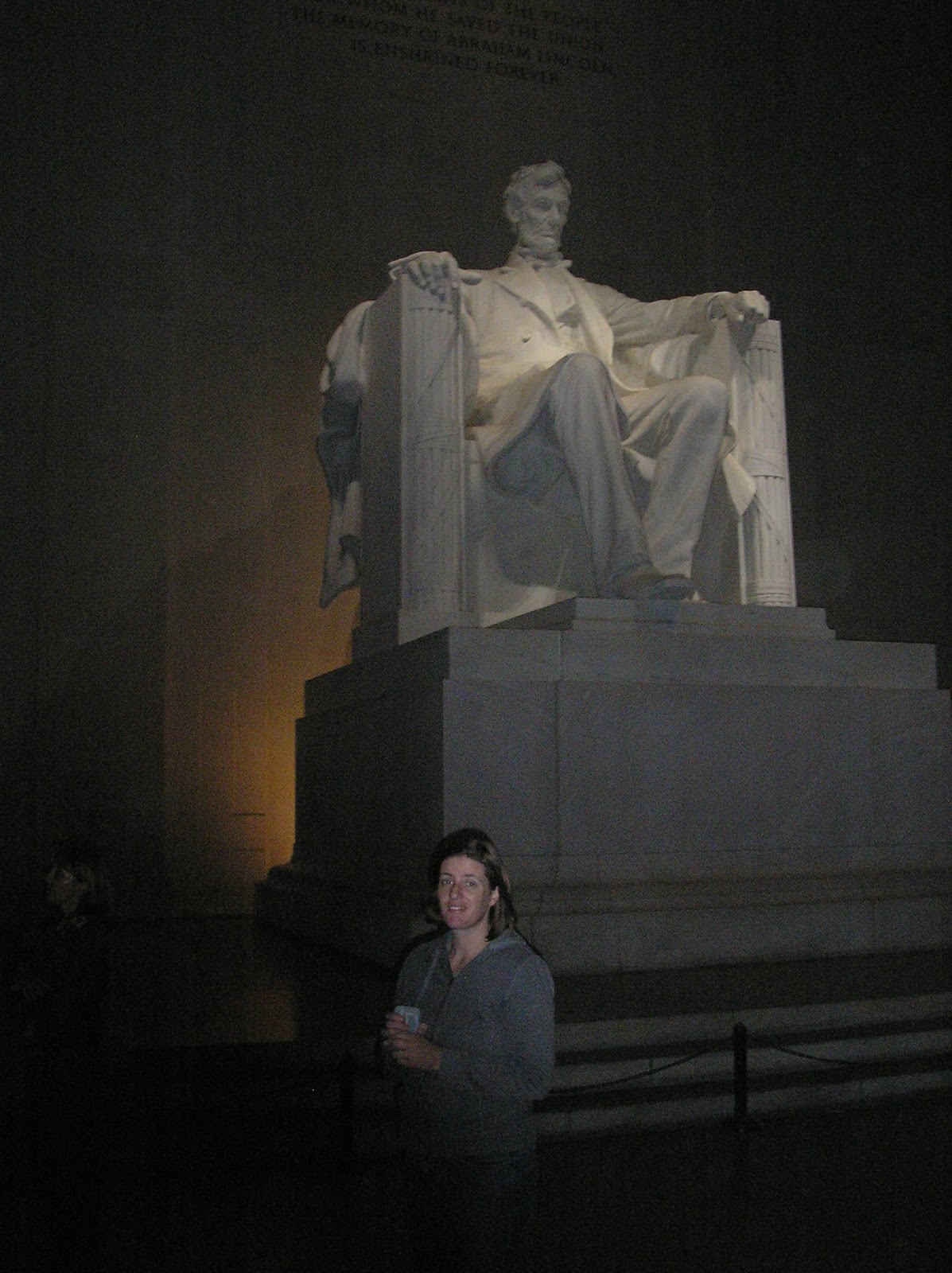
So on to the next debate. President’s Day approaches:

Abraham Lincoln
Speak up:
22 comments| TAGS:
Abraham Lincoln, Christmas trees, George Washington, President's Day, Whole Latte LifeConquering Clichés, Part 1
It was a dark and stormy night. My heart pounded as I prepared to write this post. I got butterflies in my stomach, and suddenly I felt cold as ice. . . .
Clichés: Ever-lurking. Ready to spring themselves into your manuscript. Sneaking in with those fiery-tempered red-heads and ditzy cheerleaders. All those overused ideas and expressions that we roll our eyes at in others’ work, but fail to see in our own. (Okay, I may be speaking for myself here).
The first time I saw “cliché” marked on my manuscript by one of my critique partners, I was chilled to the bone. “What?! My work is original! I wrote it with my own hand!” Unfortunately, that has nothing to do with it.
Since then, my eyes have been opened, and I’ve improved by leaps and bounds. Trust me, the grass IS greener on the other side. It’s worth the effort to conquer the cliché (and that doesn’t always mean you can’t use them). 😉
So the thing about clichés is that there are multitudes of them. In fact, there are so many ways to be cliché, they’ve had to categorize them. Furthermore, there’s even a cliché dictionary! I bet you didn’t know that.
I know I’m leaving your hanging, just when it started to get interesting, but I am a woman of few words, and this post is getting long.
So to close (with the promise to continue this discussion next time), what is your favorite/most detested cliché?
P.S. Can you find all the clichés in this post? I’ll mail a candybar to whoever gets it right first (on their first guess). 😀
Speak up:
25 comments| TAGS:
candybar, clichés, dark and stormy nightDeep Thoughts by Janet Johnson
I know most of us are pondering our New Year’s Resolutions and setting goals right around now. I’ll get to that, perhaps on a future post.
But for today’s Welcome-Back-from-the-Holidays post I just have a simple question:
Why is it that when Batman is caught by the bad guys, they never unmask him?
I would love to hear your theories, because I watch these episodes with my boys all the time, and this simply perplexes me.
And I’m quite certain there’s a writing lesson in there somewhere. Perhaps something about logic in our plot lines? What do you think?
Speak up:
18 comments| TAGS:
Batman, New Year's Resolutions, writingMerry Christmas!
With T-minus 3 days and counting, I’ll be signing off until after the holidays, but here’s a peek at our eclectic little Christmas tree . . . laden with all the ornaments we’ve collected from every place we’ve visited.

I had to show this one: it’s an outhouse ornament we found in Steamboat springs. Classic!

And an ornament I made for my mom in first grade. (Awww, wasn’t I cute?)

Wishing you all a Merry Christmas and a Happy New Year! See you all after the holidays. 🙂
Speak up:
25 comments| TAGS:
Christmas traditionsChristmas Tradition
Growing up, one of our Christmas traditions was to take cinnamon twists to all our friends and neighbors. My mom’s were the best, and we all loved helping dip them in butter and cinnamon sugar . . . and of course EATING them. 🙂
I have continued that tradition, and my kids love it! (In fact, I have dough rising in the kitchen as I type.)

So, I have never written a book that takes place at Christmas time, but for those of you who have, did you give your MC any fun traditions to look forward to? And for those of you who haven’t (like me), what is your favorite holiday tradition?
Speak up:
12 comments| TAGS:
Christmas traditions, cinnamon twistsLet It Snow!
Yesterday we finally got some snow. Kids got out early from school, and my kids didn’t want to come in.
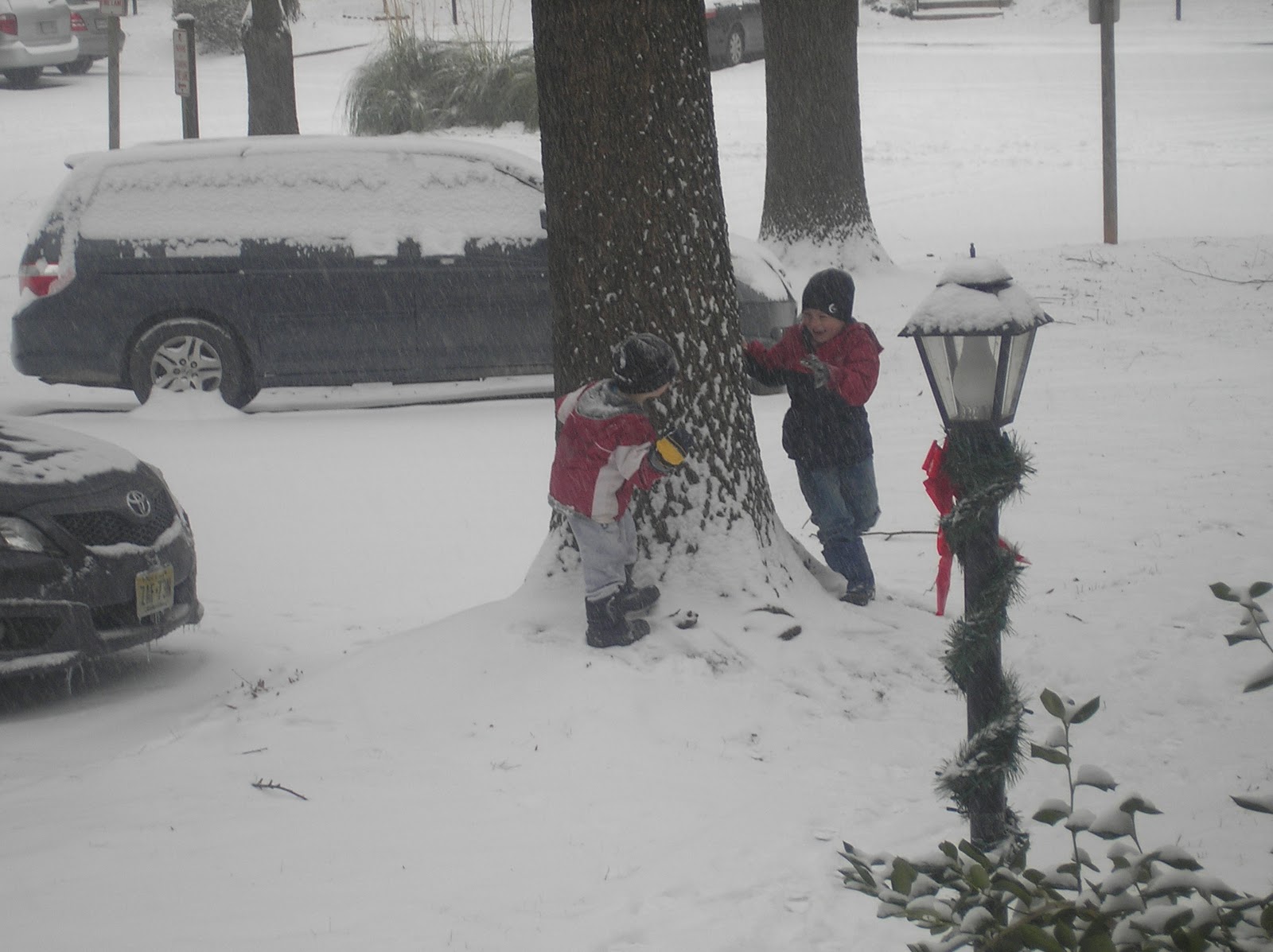
I couldn’t help smiling at the memories of my own childhood. . . . Making snow angels, throwing snow balls, building snowmen, pink frozen noses and cheeks. Then coming in to hot chocolate and toast.
We read “The Snowy Day,” by Ezra Jack Keats, and the afternoon was a perfect little picture of a childhood winter.
So what is your favorite winter book? What are your favorite memories of a childhood winter?
Speak up:
15 comments| TAGS:
books, childhood, Ezra Jack Keats, Snow, snow angels, The Snowy DayHappenstance and Other Things That Make You Laugh
 I gravitate towards humor. Those side-splitting, gut-wrenchingly funny books are my favorite. Janette Rallison‘s books always make me laugh.
And I’ve found that I love to write that way . . . but MAN! Not so easy (I’m still aspiring to it).
So for any others out there who may be interested in writing humor, here are some ways to inject humor into your book.
- Slapstick: Have your MC run into a pole, or trip over their own two feet. Putting several such instances in a series of events is even better. Good old three stooges comedy.
- Wordplay: Humor with words can come in many forms—self-deprecation; witty, sarcastic comments; and you know how you come up with the most clever comebacks about five minutes too late? Let your MC use them, and bonus, your brilliance is no longer wasted.
- Embarrassing situations: Remember that dream with you at your High School pep rally wearing only your underwear? Make it real for your MC. OR just take your own most embarrassing moment ever and make your MC suffer it, too. (Note: A cheerleader sliding down a mud hill and landing in a muddy puddle at the bottom while the whole boys basketball team watches—not that that ever happened to me—may not work if your book is set in medieval times. Maybe a dairy maid could fall into a mud puddle while the blacksmith’s son [who she’s secretly crushing on] watches. You get the idea).
- Happenstance: Who hasn’t seen the bus drive through a mud puddle soaking the poor man at the bus stop who was just having the worst day ever? Total happenstance situation.
- Puns: You know, when your MC is deciding if they should really knock on the door of Apt. 2B where their crush lives, and they say to themselves: “2B or not 2B . . .” Punny, punny, punny.
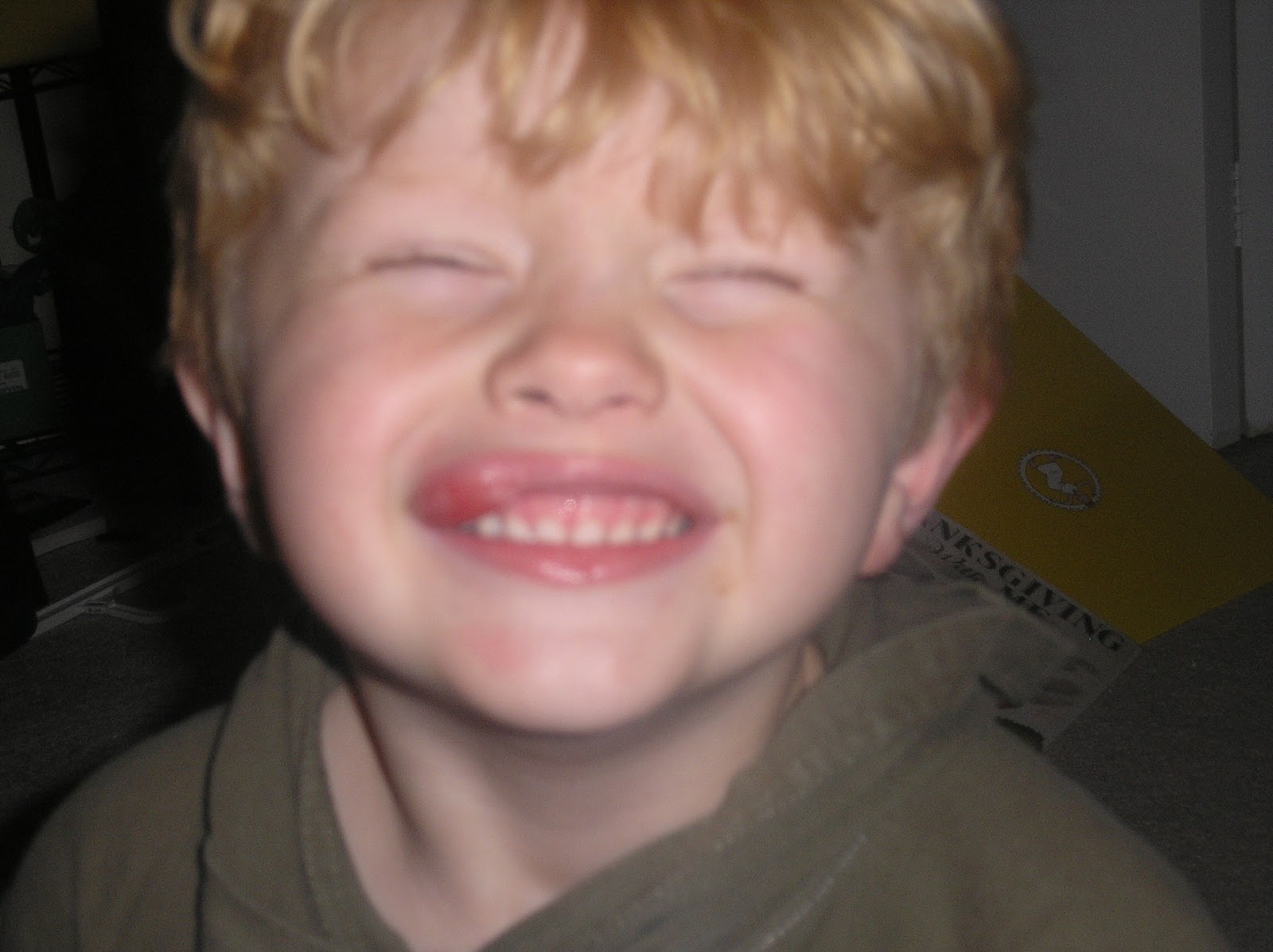
- Some things are just inherently funny: A fat lip. The word Aardvark. Dodos. Monkey brains. A talking cucumber. Road signs that say “Men Working.” Etc., etc.
So do you write humor? What sort of humor makes you laugh hardest?